Perfect Bleach to Developer Ratio: A Comprehensive Guide
Published July 21, 2026
Getting the perfect bleach to developer ratio is one of the most important steps in any hair-lightening service. Whether you’re lifting a few levels for highlights or working toward a bright blonde transformation, the balance between bleach and developer affects everything lift, processing time, tone, and hair health.
Many uneven or overly brassy results come from using the wrong developer-to-bleach ratio, not from the bleach itself. In this updated guide, we’ll explain how much developer to bleach you should use, how developer strength changes the process, and how to mix bleach safely for more consistent results.
What Do Bleach and Developer Do?
Bleach removes the natural pigment from the hair, while developer (hydrogen peroxide) opens the hair cuticle and activates the bleach.
Think of it as a two-part system:
- Bleach = the lightener
- Developer = the activator
If the mixture is too diluted, the lightening process becomes weak and inconsistent. If it’s too concentrated, it can become difficult to apply evenly and may increase the risk of breakage.
That’s why understanding the correct bleach-to-developer ratio is essential before you start mixing.
The Most Common Bleach-to-Developer Ratio
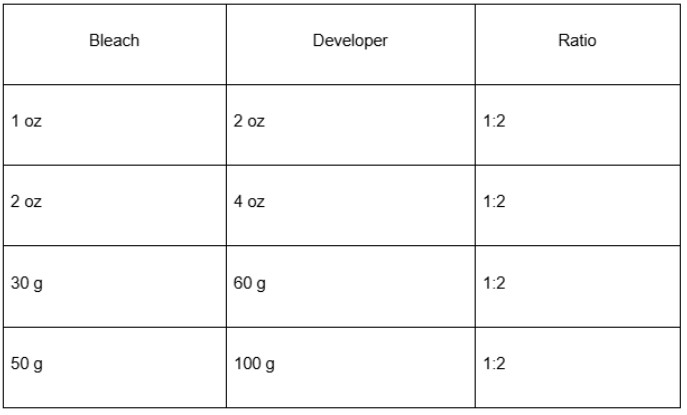
For most professional and at-home lightening services, the standard bleach-to-developer ratio is 1:2.
1:2 Ratio (Recommended)
- 1 part bleach powder
- 2 parts developer
Examples:
- 1 oz bleach + 2 oz developer
- 30 g bleach + 60 g developer
- 1 scoop bleach + 2 scoops developer
This creates a smooth, creamy consistency that spreads easily and provides controlled, even lift.
When a 1:1 Ratio Is Used
A 1:1 developer to bleach ratio creates a thicker mixture and is sometimes used for:
- Balayage
- Open-air lightening
- Maximum lift on resistant hair
Because it is stronger and less forgiving, it’s typically better suited for experienced stylists.
Slower, More Controlled Ratios
Some professionals use 1:2.5 or 1:3 when they want:
- Gentler lightening
- Better saturation on long hair
- More control during detailed color work
If you’re unsure how much developer to use, start with 1:2. It’s the safest and most versatile option for most hair types.
Quick Ratio Reference
What Happens If the Ratio Is Wrong?
Too Much Developer
A mixture with too much developer becomes thin and runny. This can lead to:
- Uneven saturation
- Patchy lift
- Excess warmth or brassiness
- Faster drying during processing
Too Little Developer
A mixture with too little developer becomes thick and difficult to spread. This can cause:
- Incomplete activation
- Dark spots
- Uneven lightening
- Clumping during application
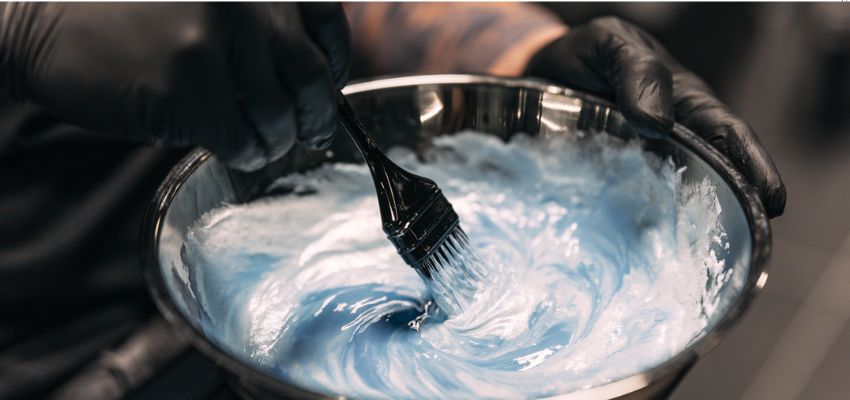
One of the biggest DIY mistakes is estimating the mixture by eye. For consistent results, always measure the bleach and developer using a scale or the manufacturer’s scoop.
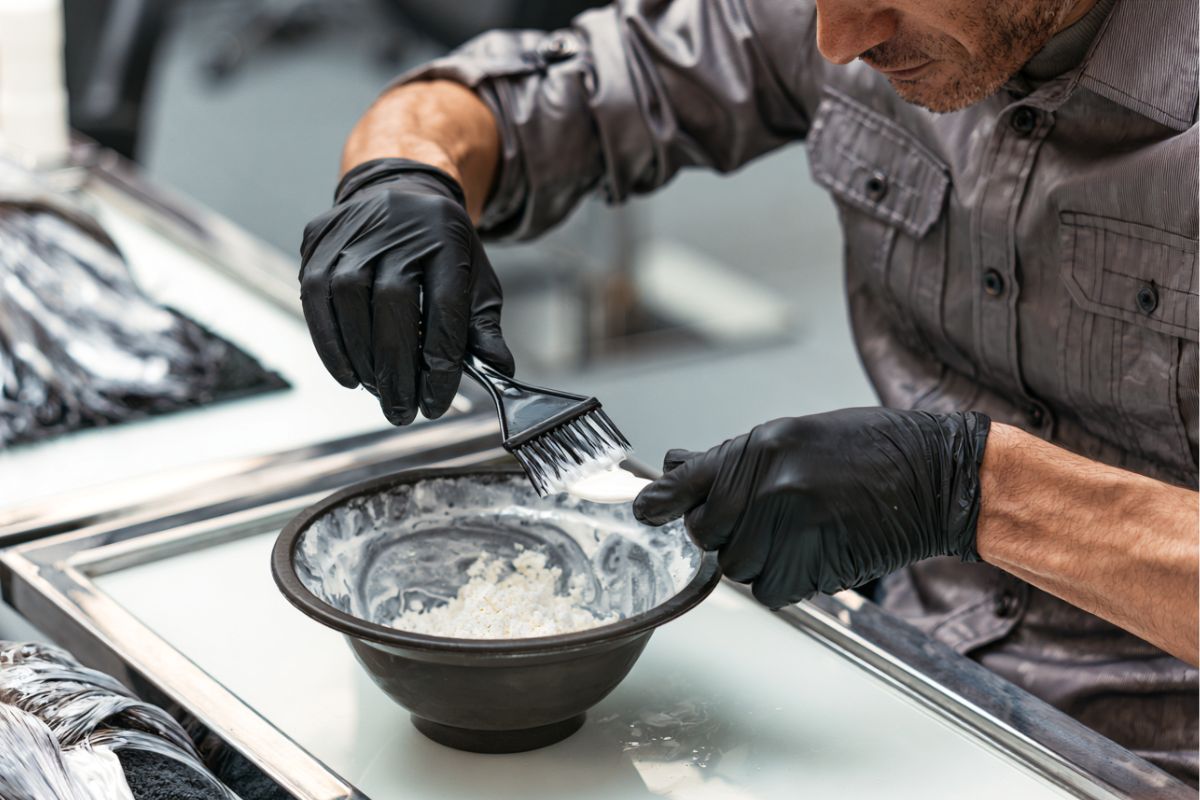
How to Mix Bleach and Developer Correctly
Follow these steps for a salon-quality mixture:
- Use a non-metallic bowl and brush.
- Measure the bleach powder first.
- Add the correct amount of developer based on your chosen developer-to-bleach ratio.
- Stir slowly until the mixture becomes smooth and creamy.
- Let it sit for about 30–60 seconds so the product fully combines.
- Apply immediately in clean, even sections.
The ideal texture is similar to yogurt easy to spread, but not dripping from the brush.
Choosing the Right Developer Volume
The ratio stays the same, but the developer volume changes the lifting power.
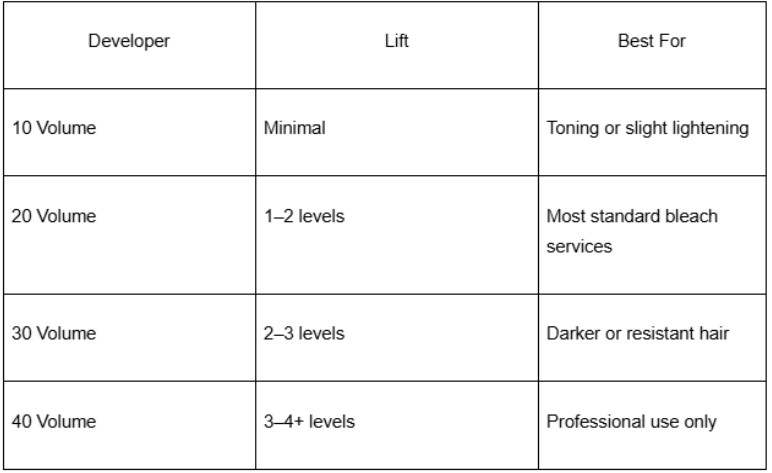
For most at-home applications, 20 volume is the safest choice. 30 volume can provide a stronger lift, but it also increases the chance of dryness and breakage.
Can You Use 30 Volume With a 1:2 Ratio?
Yes. A common professional formula is:
- 1 part bleach
- 2 parts 30-volume developer
This maintains the correct bleach-to-developer ratio while increasing lifting power. Monitor the hair closely and avoid leaving the bleach on longer than necessary.
Signs You Should Rinse Immediately
Rinse the bleach right away if you notice:
- Excessive heat on the scalp
- Burning or stinging
- Hair becoming stretchy or gummy
- Severe dryness during processing
- Uneven white patches are forming quickly
Bleach should be checked every 5–10 minutes during processing.
Protecting the Hair During Bleaching
To reduce damage:
- Perform a strand test before full application.
- Avoid bleaching freshly shampooed hair.
- Use a bond-building treatment when possible.
- Don’t overlap bleach onto previously lightened hair.
- Space major lightening services 4–6 weeks apart.
Healthy hair lifts more evenly and holds toner better, which means fewer corrective services later.
Aftercare for Bleached Hair
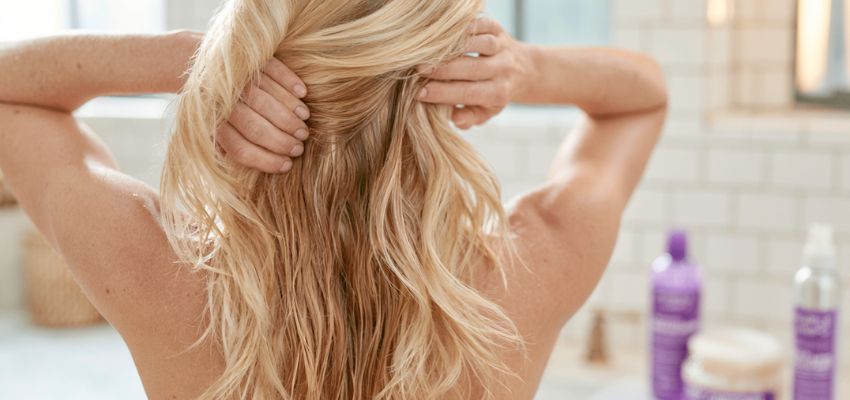
Once you’ve achieved the desired lift, focus on moisture and strength.
Weekly Care Routine
- Purple shampoo: 1–2 times per week
- Deep conditioner: weekly
- Leave-in conditioner: after every wash
- Heat protectant: before blow-drying or styling
- Protein treatment: once or twice per month if hair feels weak
Limiting heat styling and avoiding daily washing can also help preserve tone and reduce dryness.
Frequently Asked Questions
How much developer to bleach should I mix?
Use twice as much developer as bleach. The standard formula is 1 part bleach to 2 parts developer.
What is the best developer to bleach ratio?
For most hair types and lightening services, 1:2 is considered the best developer-to-bleach ratio because it provides even lift and a workable consistency.
Can I mix bleach 1:1 with developer?
Yes, but a 1:1 bleach to developer ratio is thicker and stronger. It is usually used for balayage or maximum-lift techniques and is not ideal for beginners.
Should I use 20 or 30 developer with bleach?
- 20 volume: safer and gentler; ideal for most applications.
- 30 volume: stronger lift for darker hair, but with a higher risk of damage.
Is a 40-volume developer safe at home?
It is generally not recommended for home use. 40-volume processes very quickly and can cause significant damage if applied incorrectly.
Final Thoughts
If you remember only one thing, remember this: the safest and most effective bleach-to-developer ratio is usually 1:2. That means one part bleach and two parts developer.
Understanding how much developer to use and choosing the right developer volume will give you more predictable lift, better toner results, and healthier hair overall. Measure carefully, perform a strand test, and avoid rushing the process.
And if you’re a stylist looking for a professional environment to grow your business, Salon Suites of Boca Raton offers beautifully maintained salon suites with flexible lease options and a supportive community of beauty professionals. Book a tour today and see how our Boca Raton salon suites can help take your business to the next level.
Lease Salon Space In Boca Raton Florida
Join a vibrant community of beauty professionals when you rent salon space in Boca Raton with us. Whether you’re a hairstylist, nail technician, or esthetician we have a place for you. Joining our salon family means you’re becoming part of a network that values your growth. At our Boca Raton location, you’ll enjoy free cleaning services, flexible lease agreements, and much more. Lease salon space in Boca Raton by reaching out today.

About The Author
Meet Rei Bayucca, a professional writer and passionate expert in all things related to beauty. Every article is purposely designed to assist you in tackling your most challenging dilemmas. Rei’s knack for creating engaging content is guaranteed to ignite your curiosity.