Hair Dye to Developer Ratio: A Beginner’s Guide
Published June 8, 2026
Achieving beautiful, consistent hair color starts long before the dye touches your hair. One of the most important factors in any coloring process is understanding the correct hair dye to developer ratio. Mixing the wrong amounts can affect color vibrancy, gray coverage, lift, and even the overall health of your hair.
Whether you’re coloring your hair at home or learning the basics of professional hair coloring, this guide will help you understand the ideal mixing ratios, developer strengths, and techniques for measuring your products accurately.
Why the Hair Dye to Developer Ratio Matters
Hair color and developer work together as a chemical system. The developer activates the color molecules and helps them penetrate the hair shaft. If the mixture is off, the results may include:
- Uneven color application
- Poor gray coverage
- Color that fades quickly
- Insufficient lift when lightening
- Excessive hair damage
Using the correct developer to dye ratio ensures the formula performs as intended and delivers predictable results.
Understanding Hair Color Terminology
Before mixing your color, it helps to know a few key terms.
Developer
Developer, also known as peroxide, activates hair dye and determines how much lift or deposit occurs during processing.
Mixing Ratio
The mixing ratio refers to the amount of hair color compared to the amount of developer in the formula. Common ratios include:
- 1:1
- 1:1.5
- 1:2
Always check the manufacturer’s instructions, as different brands may require different ratios.
Hair Porosity
Porosity affects how quickly hair absorbs color. Highly porous hair tends to absorb color faster, while low-porosity hair may require longer processing times.
Processing Time
This is the amount of time the color mixture remains on the hair before rinsing. Processing times vary based on the color line, developer volume, and desired results.
Tonal Base
The underlying pigment present in natural hair influences how the final color appears after processing.
How Much Developer Do I Mix With Hair Dye?
One of the most common questions is: How much developer do I mix with hair dye?
The answer depends on the specific product and desired outcome. However, these are the most commonly used mixing ratios:
1:1 Hair Dye to Developer Ratio
- 1 part hair dye
- 1 part developer
Example:
- 2 oz hair dye
- 2 oz developer
Best for:
- Gray coverage
- Single-process coloring
- Darkening hair
- Coloring close to your natural shade
1:1.5 Developer to Dye Ratio
- 1 part hair dye
- 1.5 parts developer
Example:
- 2 oz hair dye
- 3 oz developer
Best for:
- Toning services
- Moderate lifting
- Enhanced color penetration
1:2 Hair Dye to Developer Ratio
- 1 part hair dye
- 2 parts developer
Example:
- 2 oz hair dye
- 4 oz developer
Best for:
- High-lift blondes
- Significant lightening
- Maximum color lift
Step-by-Step Guide to Mixing Hair Dye and Developer
Follow these steps to achieve an accurate mixture every time.
Step 1: Read the Manufacturer’s Instructions
Different color brands use different formulations. Always verify the recommended hair dye to developer ratio before mixing.
Step 2: Gather Your Tools
Prepare:
- Hair dye
- Developer
- Plastic or silicone mixing bowl
- Tint brush
- Measuring cup or scale
- Gloves
Avoid metal bowls and utensils, which may interfere with the coloring process.
Step 3: Measure the Hair Color
Dispense the exact amount of hair color required according to your formula.
Step 4: Measure the Developer
Add the correct amount of developer based on the recommended developer to dye ratio.
For example:
- 1:1 ratio = equal amounts
- 1:2 ratio = twice as much developer as color
Step 5: Mix Thoroughly
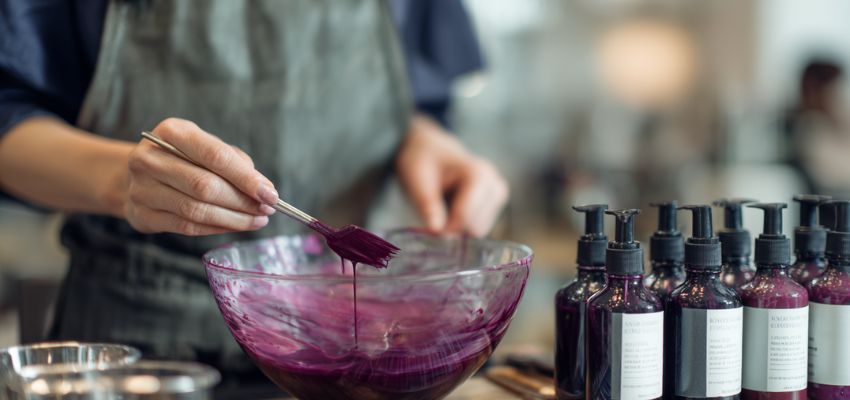
Blend the mixture until it becomes smooth and creamy with no streaks or lumps.
Step 6: Apply Immediately
Once mixed, apply the formula promptly. Delaying application can reduce effectiveness as oxidation begins immediately.
Step 7: Process According to Instructions
Allow the color to develop for the recommended processing time before rinsing.
Understanding Developer Volumes
Choosing the right developer is just as important as using the correct ratio.
10 Volume Developer
Best for:
- Depositing color
- Toning
- Refreshing faded color
- Minimal lift
Expected lift:
- Little to no lightening
20 Volume Developer
Best for:
- Gray coverage
- Permanent color
- Moderate color changes
Expected lift:
- 1–2 levels
30 Volume Developer
Best for:
- Noticeable lightening
- Fashion colors
- Medium to dark hair transformations
Expected lift:
- 2–3 levels
40 Volume Developer
Best for:
- High-lift blondes
- Significant lightening
Expected lift:
- 3–4 levels
Because of its strength, 40-volume developer should be used carefully and according to professional guidelines.
Best Practices for Accurate Measurements
To achieve consistent results:
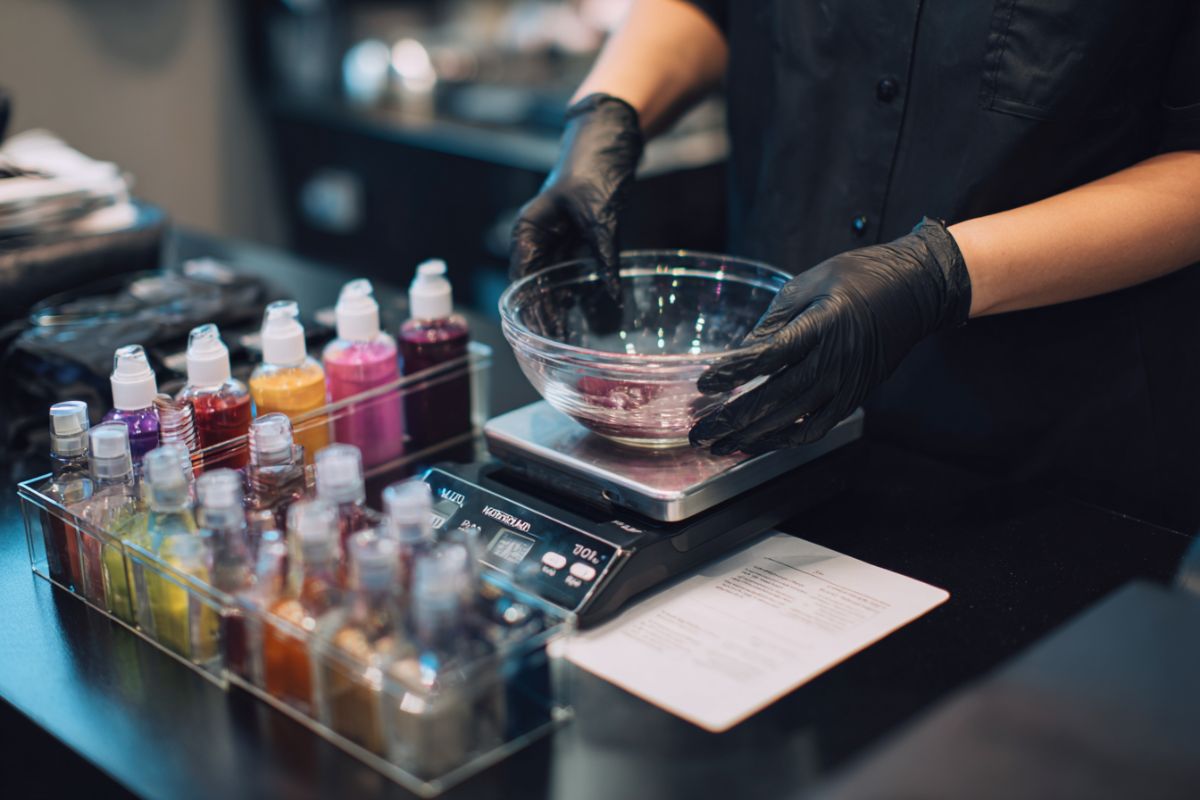
Use a Digital Scale
A scale provides the most accurate measurements and ensures formula consistency.
Follow Product Instructions
Never assume all color lines use the same mixing ratio.
Measure Carefully
Even small measurement errors can impact color results.
Mix in Non-Metal Bowls
Plastic, glass, or silicone bowls help maintain formula integrity.
Consider Hair Length and Density
Longer or thicker hair may require additional product to ensure full saturation.
Common Hair Color Mixing Mistakes
Avoid these frequent errors:
- Guessing measurements instead of measuring accurately
- Using the wrong developer volume
- Ignoring manufacturer instructions
- Mixing too much or too little product
- Applying color unevenly
- Leaving color on longer than recommended
Frequently Asked Questions
What is the standard hair dye to developer ratio?
The most common hair dye to developer ratio is 1:1, meaning equal parts color and developer. However, some products require a 1:1.5 or 1:2 ratio.
How much developer do I mix with hair dye for gray coverage?
Most permanent hair color formulas for gray coverage use a 1:1 ratio with 20-volume developer.
Can I add extra developer to make hair lighter?
Not necessarily. Adding more developer than recommended can dilute the formula and produce uneven or unpredictable results. Follow the manufacturer’s instructions.
Which developer volume should I use?
- 10 volume: deposit only
- 20 volume: gray coverage and standard coloring
- 30 volume: moderate lightening
- 40 volume: maximum lift
Can I use a kitchen scale to measure hair color?
Yes. Many professionals use digital scales because they provide the most accurate measurements for consistent results.
Does every brand use the same developer to dye ratio?
No. Different brands have different formulations and mixing requirements. Always read the instructions included with your color product.
Final Thoughts
Understanding the correct hair dye to developer ratio is one of the most important skills for achieving beautiful, predictable hair color results. Whether you’re wondering how much developer do I mix with hair dye or trying to determine the best developer to dye ratio for your desired look, accurate measurements and proper developer selection make all the difference.
By following manufacturer guidelines, using the correct developer volume, and measuring carefully, you’ll achieve more consistent color, better coverage, and healthier-looking hair every time.
Lease Salon Space In Boca Raton Florida
Join a vibrant community of beauty professionals when you rent salon space in Boca Raton with us. Whether you’re a hairstylist, nail technician, or esthetician we have a place for you. Joining our salon family means you’re becoming part of a network that values your growth. At our Boca Raton location, you’ll enjoy free cleaning services, flexible lease agreements, and much more. Lease salon space in Boca Raton by reaching out today.

About The Author
Meet Rei Bayucca, a professional writer and passionate expert in all things related to beauty. Every article is purposely designed to assist you in tackling your most challenging dilemmas. Rei’s knack for creating engaging content is guaranteed to ignite your curiosity.